 Image 1 of 2
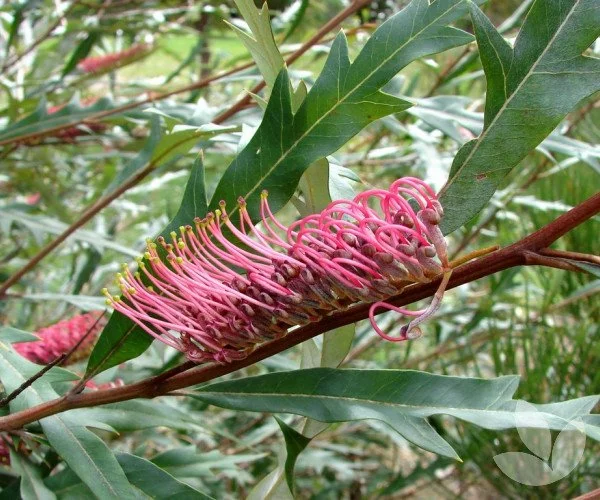 Image 2 of 2
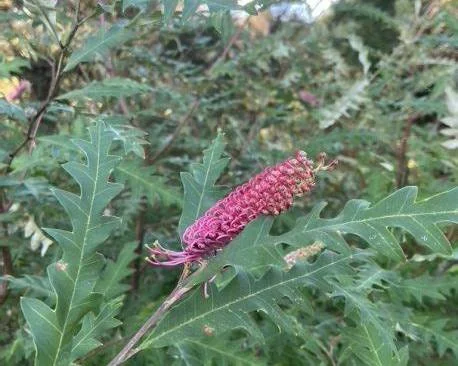
Grevillea barklyana is a striking Australian native shrub prized for its distinctive foliage and long, rich pink to reddish-pink toothbrush-style flowers. The flowers are displayed prominently amongst the foliage and are highly attractive to nectar-feeding birds.
One of its most interesting features is its variable foliage. Leaves may be almost entire or divided into several broad, pointed lobes, giving established plants an attractive and somewhat architectural appearance. Australian Plants Society material describes the Victorian form as naturally occurring in moist gullies in Gippsland, where plants can become quite large; under garden conditions, around 4 metres is more typical.
Botanical name: Grevillea barklyana
Common name: Gully Grevillea
Family: Proteaceae
Habit: Large, spreading evergreen shrub
Height: Approximately 3–4 m in cultivation, potentially larger in favourable conditions
Width: Approximately 2–4 m, depending on conditions and pruning
Flowers: Long pink to deep pink toothbrush-style flower clusters
Foliage: Attractive green leaves, varying from entire to deeply lobed
Flowering: Can flower over an extended period; some forms flower for much of the year
Wildlife: Excellent nectar source for native birds and other pollinators.
Plant in sun to part shade in a well-drained position. Because this species naturally occurs in gully environments, it appreciates more reliable moisture than many dry-country Grevilleas, particularly while becoming established.
Mulch well to conserve soil moisture, but keep mulch away from the main stem. Light pruning can be used to encourage a denser, more compact plant.
Like other Grevilleas, it is adapted to relatively nutrient-poor Australian soils. Avoid high-phosphorus fertilisers; where feeding is required, choose a low-phosphorus fertiliser formulated for Australian native plants.
Grevillea barklyana makes an impressive feature shrub or background plant and is particularly useful in larger native gardens, wildlife gardens and informal screens. Its combination of unusual foliage and conspicuous pink flowers gives it ornamental value even when it isn't at peak flowering.
Allow plenty of room for the plant to develop its naturally spreading form.
The nectar-rich Grevillea flowers are particularly valuable in a wildlife garden. The long toothbrush flowers provide an attractive feeding source for nectar-feeding birds, and Australian cultivation accounts specifically note that birds are strongly attracted to G. barklyana.
Grevillea barklyana – Gully Grevillea
A wonderful choice for larger native gardens where both flowers and distinctive foliage can be appreciated.
Grevillea barklyana is a striking Australian native shrub prized for its distinctive foliage and long, rich pink to reddish-pink toothbrush-style flowers. The flowers are displayed prominently amongst the foliage and are highly attractive to nectar-feeding birds.
One of its most interesting features is its variable foliage. Leaves may be almost entire or divided into several broad, pointed lobes, giving established plants an attractive and somewhat architectural appearance. Australian Plants Society material describes the Victorian form as naturally occurring in moist gullies in Gippsland, where plants can become quite large; under garden conditions, around 4 metres is more typical.
Botanical name: Grevillea barklyana
Common name: Gully Grevillea
Family: Proteaceae
Habit: Large, spreading evergreen shrub
Height: Approximately 3–4 m in cultivation, potentially larger in favourable conditions
Width: Approximately 2–4 m, depending on conditions and pruning
Flowers: Long pink to deep pink toothbrush-style flower clusters
Foliage: Attractive green leaves, varying from entire to deeply lobed
Flowering: Can flower over an extended period; some forms flower for much of the year
Wildlife: Excellent nectar source for native birds and other pollinators.
Plant in sun to part shade in a well-drained position. Because this species naturally occurs in gully environments, it appreciates more reliable moisture than many dry-country Grevilleas, particularly while becoming established.
Mulch well to conserve soil moisture, but keep mulch away from the main stem. Light pruning can be used to encourage a denser, more compact plant.
Like other Grevilleas, it is adapted to relatively nutrient-poor Australian soils. Avoid high-phosphorus fertilisers; where feeding is required, choose a low-phosphorus fertiliser formulated for Australian native plants.
Grevillea barklyana makes an impressive feature shrub or background plant and is particularly useful in larger native gardens, wildlife gardens and informal screens. Its combination of unusual foliage and conspicuous pink flowers gives it ornamental value even when it isn't at peak flowering.
Allow plenty of room for the plant to develop its naturally spreading form.
The nectar-rich Grevillea flowers are particularly valuable in a wildlife garden. The long toothbrush flowers provide an attractive feeding source for nectar-feeding birds, and Australian cultivation accounts specifically note that birds are strongly attracted to G. barklyana.
Grevillea barklyana – Gully Grevillea
A wonderful choice for larger native gardens where both flowers and distinctive foliage can be appreciated.